Police Car Line Driving
Village Lines 98

Colorful Neon Maze
Duo Ball Adventure
Baseball League 2024
Digital Circus Town Builder

Topbike Racing & Moto 3D Bike 2023

Drift No Limit: Car Racing
Some Little Enemies

Goemetry Vertical (poligon Dash)
City Idle Counter Terrorists
Clickerdon
1) Ever wondered what’s really under your skin — and how it all fits together? World of Alice: The Bones turns that curiosity into a bright, interactive learning adventure. It’s not a dry anatomy lesson — it’s a playful, story-driven educational game where kids explore the human skeleton by helping Alice piece bones together, identify body parts, and learn how movement actually works. 2) What kind of game it is World of Alice: The Bones is an educational puzzle and discovery game designed for children, teachers, and parents who want learning to feel like play. It mixes simple drag-and-drop mechanics with short narrated facts about anatomy. Each level introduces a new bone or body system, showing how everything connects from head to toe. It’s both fun and factual — a mix between interactive biology lab and classroom storybook. 3) The learning adventure You follow Alice — a curious explorer who guides players through the human body’s framework. Each stage focuses on a section: Skull and Spine: the body’s support structure. Arms and Hands: how bones help us lift, grab, and balance. Legs and Feet: the mechanics of walking and jumping. Ribs and Torso: protection for vital organs. The player helps her assemble skeletons, solve mini-quizzes, and match bone shapes to their names. When you finish, you get a satisfying “complete skeleton” reveal and a short fun fact narrated in Alice’s friendly voice. 4) Controls Desktop: Click + Drag: Move bones or puzzle pieces into position. Click: Confirm matches or replay explanations. Mobile / Tablet: Tap + Drag: Move pieces. Tap: Listen to narration or replay hints. Controls are perfectly tuned for younger players — precise enough for puzzle accuracy but forgiving enough that mistakes don’t frustrate. 5) What makes it engaging for learners The secret is active learning through repetition. Kids aren’t just told which bone is which — they see, touch, and connect each piece. The narration reinforces vocabulary while the visuals show context, like “the femur helps you run and jump.” Each success triggers a small animation or sparkle, giving constant positive feedback. Parents and educators love it because it naturally combines fun and factual retention. Children love it because it feels like solving a friendly puzzle, not sitting through a lesson. 6) Smart play tips for parents or teachers Play alongside younger kids. Ask them to name bones aloud before dropping them into place. Revisit finished levels. Repetition helps solidify memory. Encourage observation. Point out real-world examples (“touch your elbow — that’s your humerus!”). Use the narration replay. Listening again reinforces pronunciation and comprehension. 7) Visuals and sound Everything in World of Alice: The Bones is designed to comfort and engage: soft pastels, clear outlines, and expressive characters. The skeletons look friendly and cartoonish — never scary. The background music is gentle and rhythmic, while the voice narration is warm and enthusiastic, keeping kids focused without sensory overload. 8) Educational value The game subtly builds foundational knowledge aligned with early biology and anatomy lessons: Vocabulary (bone names, joints, structure) Spatial reasoning (how parts fit together) Cause and effect (which bones protect or move what) Fine motor control (drag-and-drop precision) It’s a small but powerful way to prepare kids for science in later grades. 9) Common play issues and quick fixes Dragging too fast: can make pieces miss alignment. Slow, steady movement works best. No sound narration: check volume settings — narration is crucial to learning flow. Progress reset: enable cookies or local storage so finished stages stay unlocked. On mobile, play in landscape mode for better visibility of all bone areas. 10) Why World of Alice: The Bones stands out Because it turns complex science into something kids want to explore. It’s bright, respectful of attention spans, and actually teaches — not just entertains. For classrooms, homeschools, or family playtime, it’s a great example of gamified education done right. If you liked learning games like Human Body Adventure, Tinybop Explorer, or ABCya Science Lab, this one fits perfectly into that world — engaging, informative, and beautifully built around curiosity.
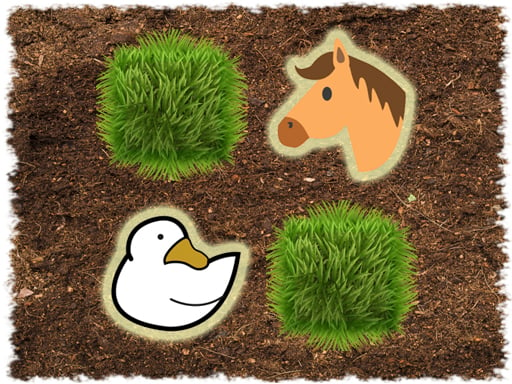
Click on the answer that corresponds to the missing bone in the box

So many more games you can play!
More games
 Home
Home
 Trending Games
 Categories
 Arcade
  3D
3D  Action
  Adventure
  Shooting
  Racing
  Girl
Girl  Puzzle